
Some businesses look more independent than they actually are. The calendar is no longer packed with every meeting. The team is handling more of the day-to-day work. Client deliverables are moving. There may even be stretches of time when the founder is physically away from the business and everything appears to continue.
Still, the business has a way of keeping part of the founder close. A client situation needs interpretation. A team member wants a quick read before moving forward. A decision slows down because the standard is not fully clear without the founder’s input. A project continues, though not with the same confidence, until the founder weighs in.
Nothing may be broken. The business may be serving clients, generating revenue, and getting the work done. The quieter issue is that too much still depends on the founder’s availability, even when the founder is no longer doing all the work. That is the difference between availability and dependency: availability is a leadership choice, while dependency is an operating pattern.
There are times when a founder’s involvement is appropriate. Certain decisions should come back to the person carrying the vision, the financial responsibility, the client relationship, or the long-term direction of the business. Strong leadership does not mean disappearing from the work that matters. The problem begins when the business cannot clearly tell the difference between what truly requires the founder and what has simply become familiar to route back to the founder.
That difference may not be obvious at first because it often hides inside reasonable requests. A quick question. A second opinion. A request to look something over before it goes to a client. A concern that feels slightly too delicate for someone else to handle alone. A team decision that technically belongs elsewhere, yet still feels safer with the founder’s confirmation. Each moment may seem small, while together they create a business that continues to lean on the founder’s judgment as the default stabilizer.
For capable founders, this pattern can be especially difficult to name because the business is usually still functioning. The team is not careless. Clients are not necessarily unhappy. Revenue may be steady or growing. The founder may even have more support than they had a year ago. The question is not whether support exists. The better question is whether the structure behind that support is strong enough to hold responsibility without constantly sending it back to the founder.
That is where the cost begins to show up. Time away from the business does not always create true margin. A quieter afternoon can still carry open loops. A week may end with the urgent work handled, while the deeper weight remains: the sense that too much could still come back if something becomes unclear, sensitive, or important enough.
That kind of mental presence is expensive because it affects the way a founder rests, thinks, plans, and leads. It changes how they enter the next meeting because part of their attention is still tracking the unresolved pieces. It changes how they look at the next quarter because they know the plan may still depend too heavily on their personal involvement. It changes how they experience time away because distance from the business is not the same as release from responsibility.
This is not about wanting to care less. Most founders who find themselves in this place care deeply, and that is part of why the business has made it this far. They have protected the client experience, filled the gaps, held the standard, made decisions under pressure, and found ways to keep the business moving. In the earlier stages, that level of personal involvement may have been necessary because the founder often becomes the structure before the business has one.
During those earlier seasons, the founder’s memory, judgment, standards, and instincts often fill the space where formal structure does not yet exist. That is not a character flaw. It is part of how many founder-led businesses get built. Over time, though, the business can become so accustomed to relying on the founder’s read that it fails to develop enough strength around ownership, decision-making, and standards elsewhere. The same involvement that once protected the work can quietly begin to keep too much responsibility close to the founder.
The team is usually not trying to create dependence. More often, people are trying to make the right call with the information and authority they believe they have. If the standard is unclear, the client situation feels sensitive, or the consequences feel risky, bringing the decision back to the founder can seem responsible. Over time, that behavior becomes normal because the structure has made it feel like the safest path.
A business will keep repeating the behaviors its structure rewards. When asking the founder is consistently treated as the safest path, people learn to ask. When the clearest standard lives in one person’s head, interpretation keeps returning to that person. And when ownership is defined mostly by task completion instead of decision authority, the work may move to someone else while the real responsibility remains with the founder.
That is one of the reasons delegation alone does not solve this. A founder can hand off more tasks and still remain central to the way the business functions. Someone else may manage the project, send the email, update the client, or run the meeting, while the founder still carries the final read on what is appropriate, complete, aligned, or good enough. The task moved, while the judgment stayed close.
That is why rest still feels incomplete. The founder may no longer be doing everything, yet too much still requires their interpretation. The business may have more hands involved, yet not enough clear ownership. The calendar may look more open, yet the mental load remains because the business has not fully learned how to make decisions, protect standards, and move work forward without the founder’s presence nearby.
This is where sustainability becomes more than a personal discipline issue. It is easy to talk about rest as though the founder simply needs stronger boundaries, better time protection, or a firmer commitment to stepping away. Those things have value, yet they will only go so far if the business underneath them is still designed to pull responsibility back to the same person.
A founder can block the time, close the laptop, and silence notifications. That may reduce interruptions, though it will not mature the business by itself. If the team still lacks clear decision paths, defined standards, and real ownership, pressure continues to build inside the structure. It may not always arrive as a message or a call. Sometimes it shows up as the inability to fully exhale.
That is the hidden cost of dependency: no real rest and no true margin. The founder may be away, present with family, sitting in a quiet room, or looking ahead to the next stage of growth, while part of their attention is still tracking what might be waiting. The body is away from the business, yet the mind remains near enough to respond.
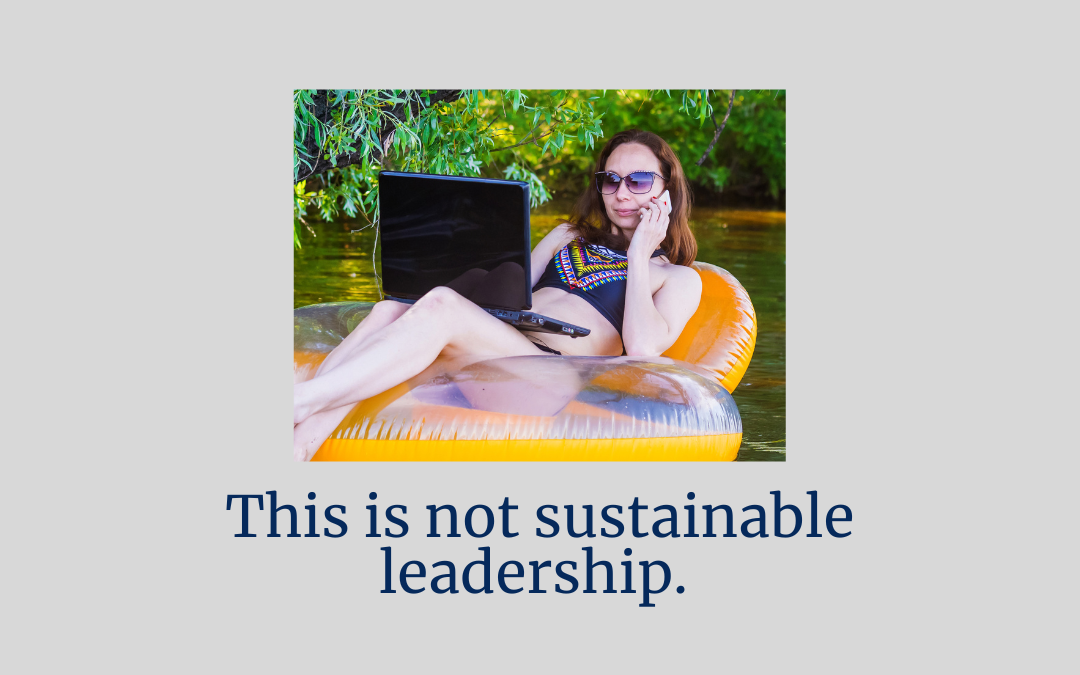
This is not sustainable leadership. It is leadership stretched across too many invisible points of responsibility. A more mature business does not remove the founder’s judgment. It places that judgment where it belongs. The founder should still shape direction, protect the vision, and make the decisions that genuinely require their level of leadership. The shift is not about becoming absent. It is about no longer being the default interpretation point for everything that feels unclear.
That shift requires the business to grow up structurally. Standards need to be clearer. Decision rights need to be understood. Ownership has to mean more than task completion. Escalation needs to have a shape, not just a feeling. The team needs to understand what they are responsible for deciding, what should come back to leadership, and what “done well” actually means in practice.
Without that, the founder stays too close to too much.
One path is to keep operating inside the current structure. The founder remains available because it works, because the team trusts them, because clients are used to their touch, and because stepping in still feels faster than slowing down to redesign how responsibility moves through the business. That path may keep things functional for a while. It may even keep the business growing. It will also keep taking pieces of attention, rest, and margin that never fully show up on the calendar.
The other path is to step back and look clearly at what the business has outgrown. Not from frustration. Not from blame. From maturity. That means noticing where judgment is still too centralized, where the team hesitates without the founder’s interpretation, where ownership is unclear beneath the task list, and where the business continues to rely on availability because the structure has not yet learned how to carry more.
That is the work of sustainable leadership at this stage. It is not about disappearing from the business, caring less, or becoming unreachable to prove a point. It is about building the kind of operational maturity where the founder’s leadership remains present without their constant availability being the thing that holds everything together.
A growing business should still benefit from the founder’s judgment. It should not require that judgment for every meaningful move.
If your business only works when you are available, it is telling you something. Not that you have failed. Not that your team is incapable. Not that you need to work harder to disconnect. It may simply be showing you that the business has reached a stage where the structure behind it needs to mature.
Once that becomes clear, the better question is not, “How do I make myself less available?” The better question is, “What needs to change so the business can carry more responsibility without sending so much of it back to me?”
That is the kind of question that can change the next season of the business, not only in terms of revenue or capacity, also in the quality of leadership, the strength of the team, and the founder’s ability to experience real rest.
If this feels familiar, a Gateway Clarity Call is a good place to talk it through.
Recent Comments